Written by the Ampt Over Electric Team — Licensed Calgary electricians with 16+ years of local experience.
Concerned about aluminum wiring in your home? Ampt Over Electric provides proven aluminum wiring solutions in Calgary to protect your home from potential hazards. Our certified electricians offer permanent fixes that ensure your family's safety. Don't wait – call (368) 993-7463 for an aluminum wiring assessment.
If your Calgary home was built between 1965 and 1972, the outlets on your walls were almost certainly designed for copper wiring. Standard receptacles cannot handle how aluminum behaves over time — and connecting them creates a fire risk that worsens with every heating and cooling cycle. CO/ALR receptacles are the device-level solution that Alberta’s electrical code specifically permits for aluminum-wired homes.
This guide explains what CO/ALR outlets are, why they matter, how they compare to pigtailing, and what you can expect to pay for a proper installation in Calgary.
What Does CO/ALR Mean?
CO/ALR stands for Copper/Aluminum Revised. The designation was introduced by the Underwriters Laboratories (UL) and adopted into the CSA Canadian Electrical Code to identify receptacles, switches, and devices engineered specifically to work with both aluminum and copper branch-circuit conductors.
Before the CO/ALR rating existed, a transitional CU/ALR marking was used. CO/ALR represents the revised and stricter standard — with terminal screws, alloys, and connection geometry all purpose-built to accommodate aluminum’s expansion rate and oxidation behaviour. You will find the CO/ALR mark stamped directly on the device body or on the mounting strap.
Standard receptacles are marked CU only or simply carry no aluminum rating. These are not safe termination points for aluminum conductors. The U.S. Consumer Product Safety Commission (CPSC) identifies improper device termination as one of the primary causes of aluminum wiring fire hazards.
Why Standard Outlets Are Unsafe With Aluminum Wiring
Two physical properties make aluminum wiring incompatible with standard receptacles: oxidation and thermal expansion.
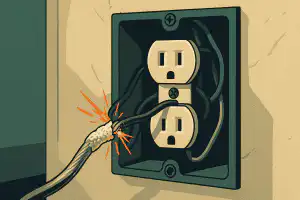
When aluminum is exposed to air, it rapidly forms aluminum oxide — a compound that resists electrical current. At the termination point of a standard outlet, this oxide layer builds up on the contact surface and increases resistance. Higher resistance generates heat; heat generates more oxidation; oxidation increases resistance further. This cycle continues silently inside your walls.
The second problem is movement. Aluminum expands and contracts roughly 40% more than copper per degree of temperature change. Every time a circuit carries load, the aluminum conductor swells slightly and relaxes when the load ends. Over years, this movement works the conductor loose from a standard brass terminal screw. A loose connection in an outlet box arcs — and sustained arcing inside a wall cavity is a recognized ignition source for house fires. According to Natural Resources Canada (NRCan), aluminum wiring hazards are directly linked to connection point failures, not the wire itself.
CO/ALR receptacles address both problems. Their terminal screws are made from alloys that form a gas-tight seal with aluminum conductors, preventing oxide build-up. The connection geometry is wider and deeper to accommodate aluminum’s larger expansion without loosening over time.
CO/ALR vs CU/ALR — What’s the Difference?
Homeowners often encounter both designations and assume they are interchangeable. They are not. CU/ALR was the original rating introduced in the early 1970s — a first-generation attempt to create aluminum-compatible devices. While better than unrated outlets, CU/ALR devices were found in practice to still develop connection problems over time.
CO/ALR (Copper/Aluminum Revised) replaced CU/ALR and reflects a more rigorous standard. CO/ALR devices underwent updated testing protocols that better simulate real-world thermal cycling and oxidation. The CSA Group certifies CO/ALR devices to CSA C22.2 No. 42, which mandates specific terminal materials and torque values for aluminum terminations.
If you have a CU/ALR device already installed, it is not automatically unsafe — but CO/ALR is the current standard and what a licensed Alberta electrician should be installing today. Any receptacle upgrade in an aluminum-wired home should use CO/ALR-rated devices certified to current CSA standards.
Where Are CO/ALR Receptacles Required?
The Alberta Electrical Safety Code (which adopts the CSA C22.1 Canadian Electrical Code with provincial amendments) permits CO/ALR device replacement as an approved remediation method for aluminum branch-circuit wiring in residential occupancies. Section 12-118 of the Canadian Electrical Code addresses aluminum conductor terminations and requires that all devices connected to aluminum wiring be rated for aluminum use.
In practice, CO/ALR receptacles are required at every outlet and switch location in a home where aluminum branch-circuit wiring terminates. This includes standard 15A and 20A receptacles throughout the home. It does not apply to service entrance conductors or feeders, which use different termination standards.
Alberta Safety Codes Officers verify compliance with these requirements during rough-in and final inspections. Work completed without permits — including device replacements in aluminum-wired homes — may not satisfy insurer remediation requirements. Any CO/ALR installation completed by Ampt Over Electric includes the required permit and Alberta Safety Codes inspection as part of the standard scope.
CO/ALR vs Pigtailing — Which Is Better?
Both CO/ALR device replacement and copper pigtailing are CPSC-approved remediation methods for aluminum wiring. The right choice depends on the condition of your wiring, your remediation goals, and your insurer’s requirements.
CO/ALR device replacement addresses the termination point only. The aluminum conductors in the walls remain in place; the outlet or switch that the aluminum wire connects to is replaced with a CO/ALR-rated device. This is faster, less invasive, and lower cost per outlet. It is the appropriate solution when the wiring itself is in good condition and the hazard is isolated to connection points.
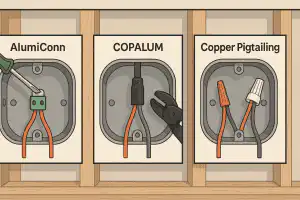
Pigtailing involves attaching a short copper tail to each aluminum conductor using a CPSC-approved connector (such as an AlumiConn or COPALUM crimp). The device then connects to the copper tail, not the aluminum. Pigtailing provides an additional layer of protection at the conductor-to-device transition and may be required by some insurers to satisfy their remediation policy. It is more labour-intensive but provides a more comprehensive correction at each location.
A properly licensed Calgary electrician can assess your specific wiring condition, advise which method is appropriate, and document the completed work for your insurer. Learn more about the actual risks aluminum wiring presents and how different remediation methods address them before deciding on an approach.
Cost of CO/ALR Outlet Replacement in Calgary
The cost of CO/ALR receptacle replacement in Calgary varies based on the number of outlets, accessibility, and whether pigtailing is included at each location. As a general reference, CO/ALR device replacement typically runs between $15 and $35 per outlet in materials, with labour and permitting adding to the total project cost.
A full home CO/ALR conversion for a typical 1960s Calgary bungalow with 20–30 outlet locations — including permit, inspection, and licensed labour — commonly falls in the $800 to $2,000 range. Homes with more outlets, panels, or complex access requirements will cost more. If your insurer requires pigtailing at each location in addition to CO/ALR devices, expect the cost to increase accordingly.
The more useful comparison is to your insurance position. Many Calgary homeowners with untreated aluminum wiring pay elevated premiums or carry restricted coverage. A one-time CO/ALR upgrade that satisfies your insurer’s requirements can reduce ongoing costs and restore full coverage. Read about the aluminum wiring home insurance situation in Canada to understand what insurers typically require before issuing coverage on a home with aluminum wiring.
Ampt Over Electric provides written quotes before any work begins. There are no surprise charges, and all electrical permits are included in the project price — no separate permit fee.
Get the Right Fix for Your Calgary Home
CO/ALR receptacles are the only device-level fix that Alberta’s electrical code recognizes for aluminum-wired homes. Installing standard outlets is not a workaround — it is a hazard. If your home has aluminum wiring, every standard outlet in your home is a potential connection failure point.
Ampt Over Electric has been serving Calgary homeowners since 2009. Our team is Red Seal certified, carries $5M liability coverage, holds an A+ BBB rating, and has completed hundreds of aluminum wiring remediation projects across Calgary. All work is permitted, inspected, and backed by our Code Guarantee. You can also book a Calgary electrical safety inspection if you want a full assessment of your home’s aluminum wiring condition before committing to a remediation approach.
Call +1 368‑993‑7463 now for immediate electrical service in Calgary or request your free quote online from the trusted local experts at Ampt Over Electric.
Frequently Asked Questions
Can I replace my own outlets with CO/ALR receptacles?
In Alberta, electrical work on branch circuits must be performed by a licensed electrician and is subject to Safety Codes permit and inspection requirements. Homeowner self-installation of CO/ALR receptacles without a permit may void your insurance coverage and will not satisfy insurer remediation requirements. A licensed electrician should complete this work.
How do I know if my outlets are already CO/ALR rated?
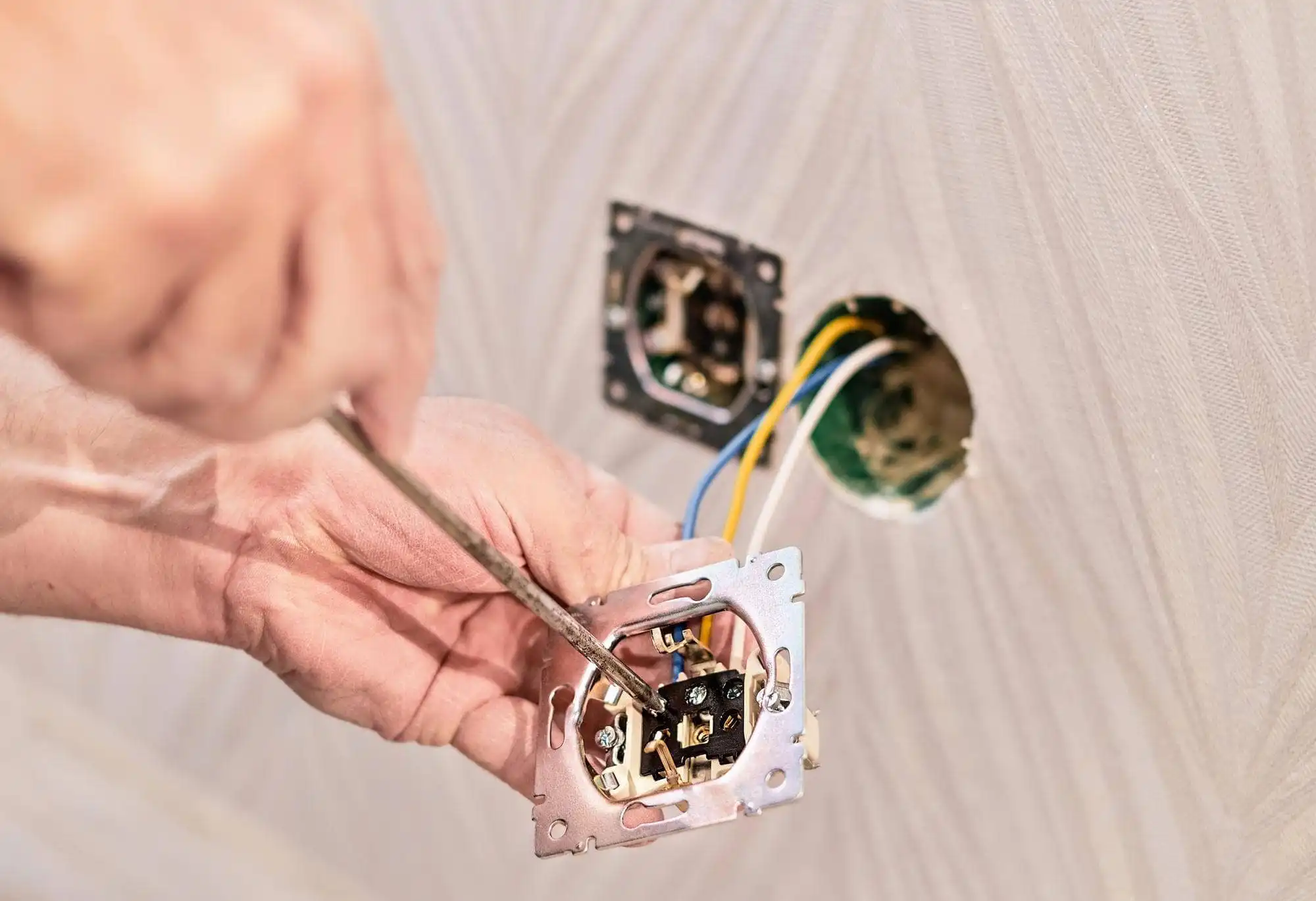
Turn off power to the circuit at your breaker panel and remove the outlet from the box. Look for the marking “CO/ALR” stamped on the mounting strap or device body. If you see “CU only,” “COPPER ONLY,” or no rating, the outlet is not aluminum-rated. If you are unsure, an Ampt Over Electric electrician can inspect your receptacles and advise on what needs replacement.
Will CO/ALR outlet replacement satisfy my home insurance company?
It depends on your insurer. Some Alberta insurers accept CO/ALR device replacement as sufficient remediation. Others require pigtailing with CPSC-approved connectors at every location, or a full electrical inspection report. Contact your insurer directly and ask what documentation they need. Ampt Over Electric can provide a written remediation report that documents the scope of work completed for insurer submission.
Are CO/ALR outlets available at hardware stores in Calgary?
CO/ALR receptacles are available at electrical supply houses and some hardware stores in Calgary. However, purchasing the correct devices and installing them correctly — including torquing terminal screws to the manufacturer’s specification — requires training and the right tools. Improperly installed CO/ALR devices provide little benefit. Proper installation by a licensed electrician is what actually makes the connection safe.
Does CO/ALR replacement fix all aluminum wiring problems?
CO/ALR device replacement addresses the most common failure point — the connection between aluminum wire and the outlet or switch. It does not address problems in junction boxes, at the panel, or within the conductor runs themselves. A qualified electrician should inspect the full system, not just the outlets, to identify any additional issues that CO/ALR replacement alone will not resolve.